A Joint Initiative By:


Browse sustainability case studies by country and discover what businesses in your market are doing.


The Common Impact Case Framework
Drawing from the existing case study frameworks of ASEAN country networks, the following common framework was adopted for the sustainability case studies found in this ASEAN ESG Space. This is to ensure credibility, quality, and relevance in the development of these sustainability impact case studies. Organised around seven (7) key domains, this framework provides a holistic view of how organisations create and deliver sustainability impact — from understanding the purpose behind an initiative to evaluating outcomes and how results are communicated.
Purpose
The underlying motivation behind the initiative, framed around a key sustainability challenge or opportunity and its relevance to the company’s values.
Process Development
The approach taken to design, implement, and evaluate the initiative, including internal processes, stakeholder involvement, and alignment with broader strategies or frameworks.
Performance Enablers
Key internal capabilities, resources, or technologies, that supported the initiative’s success.
Data Source
and Credibility
The origin, quality, and reliability of the data used to measure and communicate impact, along with any validation processes applied.
Impact Representation
Measurable outcomes achieved through the initiative, using both quantitative and qualitative indicators to showcase progress and results.
Sustainability Alignment
The connection between the initiative and broader sustainability goals or frameworks such as the UN Global Compact Ten Principles and SDGs.
Transparency
Openness in sharing insights, including achievements, challenges, and lessons learned, supporting authenticity and peer learning.
Events
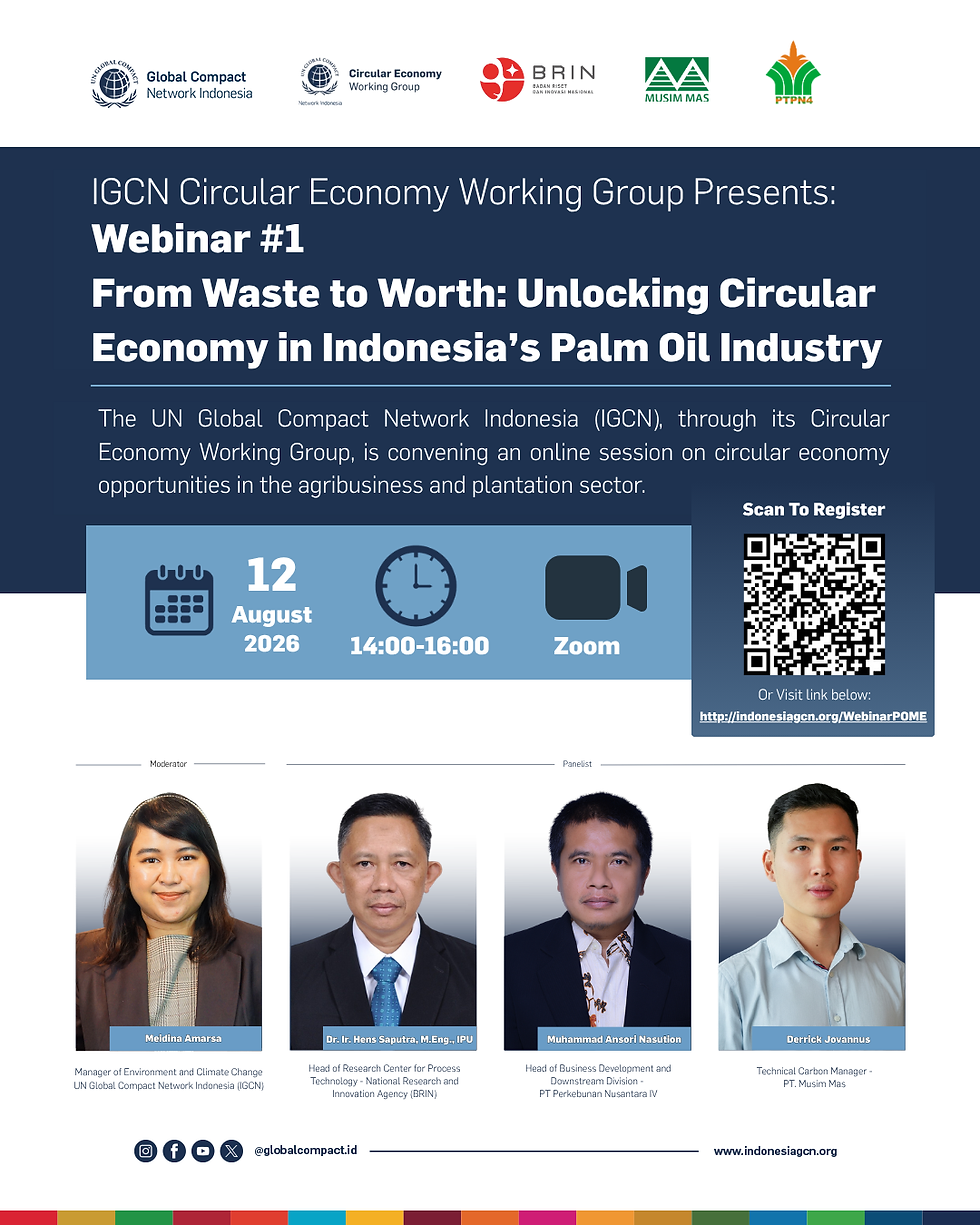
Stay informed and connected with sustainability events hosted by the Country Networks of UN Global Compact across ASEAN.